Author
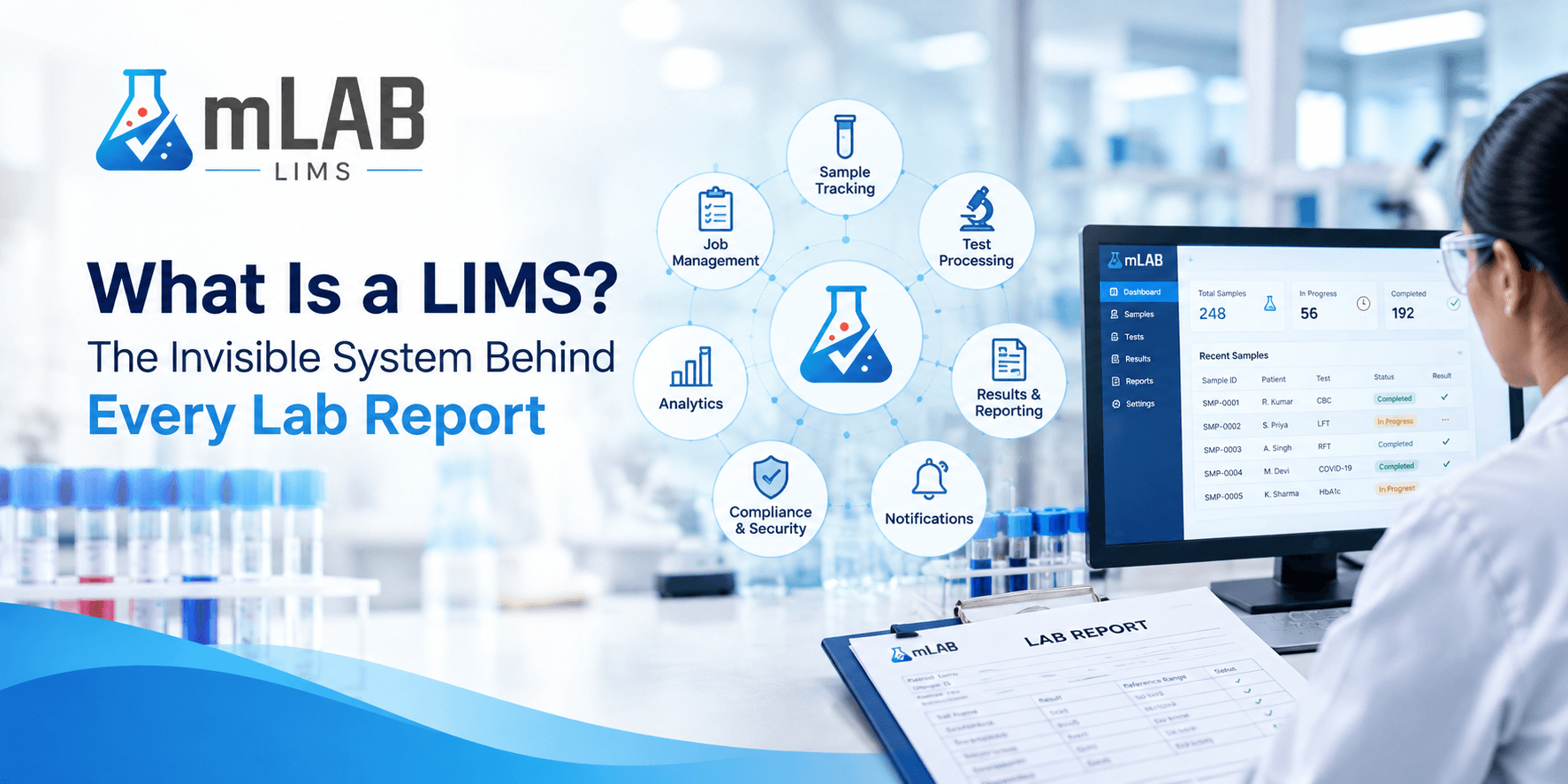
A Laboratory Information Management System (LIMS) is software that helps laboratories manage samples, tests, results, and reports — all in one organized place. Think of it as the air traffic control tower of a laboratory. Just like an airport manages hundreds of flights to make sure each plane takes off, lands, and reaches the right gate, a LIMS manages hundreds or thousands of samples every day, ensuring each one reaches the right machine, gets the right test, and produces the right result for the right patient.
In simple words, a LIMS is the system that makes sure no sample gets lost, swapped, or forgotten.
Without a LIMS, labs rely on paper registers and manual typing. With a LIMS, everything is tracked, traceable, and secure.
Imagine a hospital lab without any system. Everything on paper. Every sample written in a register. Every result typed manually.
Now imagine:
This is where chaos begins. And this is exactly where a LIMS steps in.
A LIMS brings order, speed, and accuracy to a laboratory that would otherwise struggle under the weight of thousands of daily samples.
Let's walk through a typical day in a lab and see the LIMS working quietly in the background.
When a blood sample arrives at the lab, it gets a unique barcode. The LIMS records:
From this moment, the sample has a digital identity. No confusion. No mix-ups.
As the sample moves from one machine to another, the LIMS tracks every step. It knows exactly where the sample is at any moment.
If a doctor calls and asks, "Where is patient Sharma's report?" — the lab can answer in seconds, not minutes.
Modern lab machines (like blood analyzers) can talk directly to the LIMS. The machine tests the sample and sends the result straight into the system.
No manual typing. No transcription errors. No "I think I wrote 120 instead of 102."
Once all tests are done, the LIMS compiles everything into a clean report. It can flag abnormal values, add reference ranges, and send the report to the doctor or patient automatically.
Every result is stored securely. If a doctor needs a report from three years ago, it's right there. If a health inspector needs to audit the lab, the LIMS provides complete records.
You might never see a LIMS directly. But you feel its impact every time you visit a lab.
| Without LIMS | With LIMS | | :--- | :--- | | Reports take days | Reports come faster | | Sample mix-ups happen | Barcodes prevent errors | | Results get lost | Everything is traceable | | Manual errors creep in | Machines talk directly to the system | | Hard to find old reports | Instant access to history |
For a patient, this means faster reports, fewer mistakes, and more trust.
For a lab, this means less chaos, more accuracy, and happier doctors.
Not at all.
Small diagnostic centers, research labs, food testing labs, water testing facilities, veterinary labs — anyone who handles samples and produces results can benefit from a LIMS.
There are simple, affordable options for small labs and powerful, feature-rich systems for large hospitals. The right choice depends on how many samples you handle and what kind of tests you do.
Without a LIMS, labs face several risks:
These problems not only affect the lab's reputation but also put patient safety at risk.
A well-designed LIMS usually includes:
These features ensure that the lab runs smoothly and that patients receive accurate results on time.
A LIMS is not just software. It's the backbone of a well-run laboratory.
It's the reason your blood test result reaches your doctor on time. It's the reason samples don't get swapped. It's the reason labs can handle thousands of patients without falling apart.
The next time you get a lab report, take a moment to appreciate the invisible system that made it possible.
No drama. No confusion. Just quiet, reliable work behind the scenes.
That's a LIMS for you — the silent superhero of modern healthcare.
A Laboratory Information Management System (LIMS) is essential for any lab that handles patient samples. It ensures accuracy, speed, traceability, and security at every step — from sample registration to final report delivery. Whether you run a small diagnostic center or a large hospital lab, a LIMS can transform the way you work and the way your patients experience care. Investing in the right LIMS is not just a technological upgrade — it is a commitment to quality, safety, and trust.